
Choosing a Kitten: Behavioural Tips for a Confident, Happy Cat
Choosing a kitten can feel overwhelming, especially when trying to identify a confident, well-socialised individual.
By understanding how early experiences shape behaviour, you can make a more informed decision and set your kitten up for success. When choosing a kitten, it is helpful to know that your new pet is not only healthy, but sociable and less likely to exhibit behavioural issues such as aggression or anxiety as an adult, especially if you are less experienced with cats.
What Shapes a Kitten’s Personality? A kitten’s personality is dependent on its experiences early in life. Genetics also play a role, and friendly calm parents are desirable. Between 2-9 weeks old kittens experience an important phase known as the sensitive period. During this time they are most receptive to learning and gain an understanding of what is ‘normal’ and what they do not need to be fearful of. If a kitten has not been sufficiently handled by humans during this period, they are more likely to display aggression and fear towards them later in life.
Responsible breeders/rehoming centres should ensure that kittens are adequately socialised using a variety of handlers e.g. different genders/age, for 30-60 mins per day, and if possible they should be introduced to other species such as dogs. If there are other pets in your home, it would be highly beneficial to select a kitten that has had exposure to this type of animal. It is important that kittens are gradually exposed to various sights, smells, and textures that they are likely to experience in their new home. This will allow a kitten to associate these items as normal and is a process known as habituation. Examples include washing machines and vacuum cleaners.
Kittens that are isolated from common items and experiences are much more likely to show fear when they meet them for the first time in their new home. Kitten’s use ‘observational learning’, i.e., they learn by watching other cats. Kittens that spend the sensitive period with their mothers have been shown to be quicker at learning tasks by watching their mother complete it first, e.g., learning how to use a litter tray. Kittens learn vital social and hunting skills from playing with their siblings during the sensitive period and are less likely to express aggressive play. Therefore, kittens who are hand reared are more likely to experience certain behavioural problems and tend not to interact as well with other cats.
Kittens left with their mother and siblings until at least 8 weeks old, with frequent exposure to positive human interactions are more likely to express good social behaviour.
Considerations Prior to Choosing Your Kitten. It is recommended to perform a ‘pre-visit’ before choosing, so that you can observe the kitten and ask any questions before committing. By understanding how the kitten was raised we can determine if they are more likely to experience certain issues. The kitten checklist produced by The Cat Group is a useful questionnaire to use to ensure all vital information is covered and is available here: http://www.thecatgroup.org.uk/pdfs/The-Kitten-Checklist.pdf.
Your kitten should be at least 8 weeks old (13 weeks if pedigree) before rehoming. If possible, ask to see the kittens’ parents so their temperament can be established. Interact with the kittens to see which are sociable and confident by reading their body posture, facial expressions, and their desire to interact and play.
Remember to choose a kitten based on its behaviour, temperament and whether it is healthy NOT based on its looks.
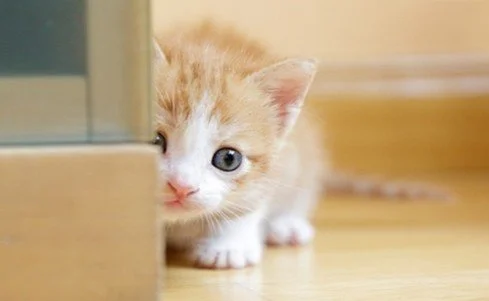
Timid, fearful looking kitten hiding and not wanting to interact.
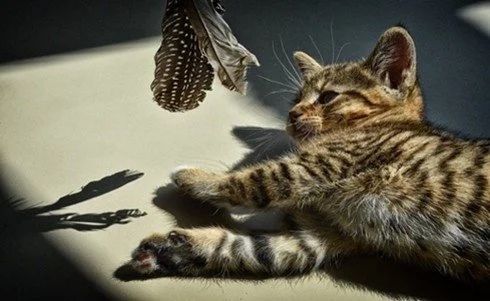
Relaxed kitten playing. Is also social and receptive to being handled.
.
Please consider adopting your kitten from a rescue setting rather than from a breeder.